A Live Clinical Briefing for experienced practitioners
From Fixing
to Facilitating
Reorienting clinical care around capacity, coherence, and integration
LIVE EVENT ENDED JAN 8
REPLAY AVAILABLE
Some clinicians arrive here already fluent in somatic work, fascia, cranial, or subtle systems.
Others arrive because — despite years or decades of experience — something in their work has started to feel heavier (even as skills have improved).
Both belong here.
This workshop is not about learning more techniques. Rather, it's about reorienting how you understand your role in the therapeutic relationship — so change no longer depends on effort, force, or fixing.
If change has stopped holding the way it used to,
the issue isn’t your skill.
If your work has started to feel heavier —
if sessions require more effort, more precision, more fixing —
you’re not imagining it, and you are not alone.
Many clinicians are noticing the same pattern:
• systems that soften briefly, then regress
• clients who feel better in-session but struggle to integrate between visits
• a growing sense that trying harder is no longer the answer
What’s often missed is this...
It isn't that your techniques stopped working.
The role clinicians have traditionally been trained to play no longer matches what modern nervous systems actually need.
For decades, care has been centered on making change happen.
But when a system is operating near its capacity, effort doesn’t help; it overwhelms.
And “fixing” can quietly become the very thing that prevents integration.
In this workshop, we explore a different orientation for the clinician:
not as the one who corrects the system, but as the one who cultivates the conditions where the nervous system prioritizes healing and change can deeply integrate.
When that role shifts:
→ integration continues between sessions
→ less force produces more durable change
→ clients become active participants rather than passive recipients
→ the work becomes lighter, clearer, and more sustainable
This is not about doing less because you care less.
It’s about working in a way that finally allows the system to do more of the healing itself.
The Hidden Pattern Shaping Resilience
(why change isn't holding anymore)
Modern physiology has crossed a threshold.
Chronic low-grade inflammation. Device posture. Cognitive and sensory overload. Fragmented sleep and recovery. Emotional compression. Reduced movement variability.
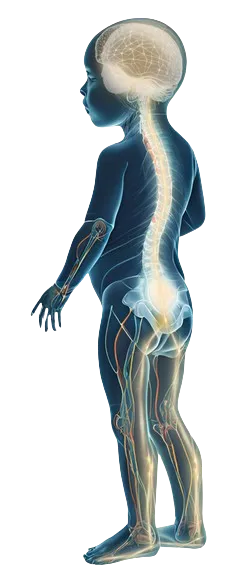
Together, these place sustained load on a specific organizing axis in the body: the Dural Fascial Kinetic Chain (DFKC)
This is the system through which the body:
• senses itself
• stabilizes
• orients in space
• processes input
• determines whether change is safe enough to integrate
When this axis is overloaded, even excellent work becomes less effective — not because the technique is wrong, but because the system responsible for organizing change no longer has the bandwidth to integrate it.
For many clinicians, understanding the relationship between the DFKC, neurostructural fluidity, and autonomic capacity is the missing piece — the moment disparate observations finally resolve into a coherent picture.
When Effort Stops Translating into Integration
From a systems perspective, what’s unfolding isn’t resistance — it’s saturation.
As systems operate closer to capacity:
• force produces diminishing returns
• deeper input doesn’t propagate
• “good work” softens tissue without reorganizing patterns
• integration stalls between sessions
In these conditions, effort itself isn’t the problem. Rather, the issue is misplaced effort.
When effort is directed toward forcing change through an overwhelmed system,
the cost is absorbed by both the client and the clinician.
In physiological terms, this makes effort metabolically and neurologically expensive —
even when care is appropriate and skillful.
As physiology shifts, the clinician’s role must shift with it.
Not away from effort,
but toward effort that cultivates coherence and restores capacity,
so the system’s innate self-organizing intelligence can actually do its job.
When work is oriented this way:
• integration happens with less strain
• results hold more consistently
• client and clinician regulate together
• the work becomes sustainable again
This is the clinical expression of vitalistic principles —
applied to the realities of modern nervous systems.
What this Clarifies in Practice
After this workshop, clinicians consistently report:
✔ greater clarity about when a system is available (and when it isn't)
✔ less pressure to "correct something" in session
✔ fewer rebounds after otherwise good work
✔ more integration occurring between visits
✔ renewed trust in the body's self-organizing intelligence
This isn't about disengaging or doing less. It's about exerting less effort because the system is finally able to do its part.
If this language feels like it puts words to what you’ve been sensing, you’re in the right place.
Who This Resonates With Most
This workshop tends to land most strongly for clinicians who:
→ work hands-on or relationally with nervous systems
→ have years of lived pattern recognition
→ can sense subtle shifts beneath the surface of symptoms
→ notice when something isn't landing (even if not yet able to explain why)
→ ready to orient care around mechanism rather than symptom management
If this page feels familiar rather than novel,
that's usually a sign of alignment.
How this fits into the larger arc
For some clinicians, this workshop is simply clarifying — a way to name what they’ve already been sensing in their work.
For others, it becomes an entry point into deeper study of the DFKC, nervous system capacity, and the NeuroFascial Flow® Method.
There is no obligation to continue beyond this workshop.
But for those who do, this orientation often becomes the place where subsequent learning finally has somewhere to land.
About Your Instructor
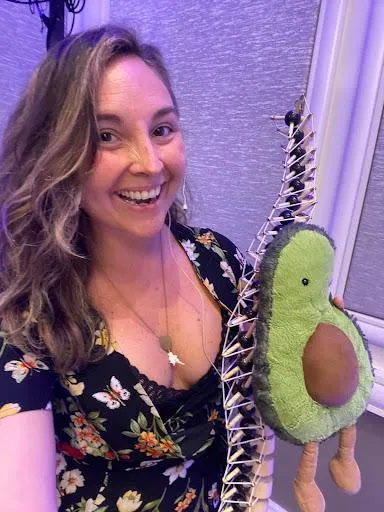
Satya Sardonicus, DC, CACCP
Founder of the NeuroFascial Flow® Method
Dr. Satya works at the intersection of fascia, neurology, somatics, and lived clinical experience — translating subtle, often hard-to-name patterns into clear clinical understanding.
Her work has helped thousands of providers make sense of why familiar approaches are no longer holding the way they once did, and how to reorient care around the body’s capacity for integration rather than force.
She is known for giving precise language to what experienced clinicians are already sensing — and for articulating a model of care that honors the body’s innate intelligence while allowing practitioners to work with greater ease, clarity, and sustainability.

About Your Instructor
Satya Sardonicus, DC, CACCP
Founder of the NeuroFascial Flow® Method